Standard

Special

Programmes that follow a body of rules of their own: religious standards under Jewish and Muslim law, and chemicals and dangerous goods under ADR.

5 programmes

P 260 K

Kosher cleaning incl. saturated steam

Kosher compliant cleaning of transport-units

In order to ensure that the Jewish food laws are observed and that the food is kosher, not only is the kosher certification of food production facilities important, but it must also be guaranteed that raw materials and food are transported exclusively in transport containers they are cleaned according the ENFIT kosher cleaning standards and documented by the ECC-ENFIT CLEANING CERTIFICATE, in combination with the ENFIT-bulkvision blockchain cloud technology.

Probably the most precise and strictest food regulations can be found in Judaism, whereby the sacred and the profane are intimately linked. Foods that are permitted to Jews under the Jewish food laws are considered "kosher," i.e., H. "pure" or "suitable", although this term does not only refer to food.

In order to ensure that the food you buy is kosher and thus complies with Jewish food laws, appropriate certifications, so-called hechsharim, have been established.

In Israel and the USA, the certification is attached to the packaging like a seal or displayed in relevant shops such as bakeries and butchers. In other countries, the corresponding foods are summarized and published in an official list.

The supervision of religious regulations is the responsibility of an authorized rabbinate, such as the Hager Kashrus Committee, Antwerp, Rabbi Pinchas Avrohom Meyers. In order to receive a certificate, the following conditions must be met:

  • All ingredients of a food must be recorded in an ingredient list.
  • All ingredients must have a Kosher certificate.
  • The rabbi is to inspect the production facility.
  • Food containers are cleaned according to the ENFIT P 260 K standard.

The food can only be sold as "kosher food" if all requirements are met. In the production of food, attention is also increasingly directed to the transport and, above all, to the corresponding "kosher cleaning" of the transport containers and the traceability of the processes. For the first time, ENFIT as an international association offers reliable and validated processes that ensure the requirements. See also the international ENFIT Guideline.

KOSHER Certification

ENFIT is authorized by the Hager Kashrus Committee in Antwerp, Rabbi Pinchas Avrohom Meyers, to issue the Kosher Certificate to ENFIT members if they follow the strict guidelines of the Rabbinate. Rabbi P.A. Meyers is particularly well known in the Jewish academic world for his extensive knowledge. This applies to all questions of transport and the cleaning of transport containers according to the high kosher requirements. He regularly writes articles on current issues and issues and has excellent connections with the Chief Rabbinate in Israel.

One of the requirements for the Kosher certificate is that the ENFIT members (cleaning stations) are certified according to the high ENFIT HQF standard. In addition, the staff has received special instruction on the correct use of the kosher cleaning program ENFIT P 260 K and knows the background and requirements of the Jewish food laws. Cleaning carried out according to the kosher ENFIT cleaning program ENFIT P 260 K is documented in the international ENFIT cleaning certificate ECC-ENFIT CLEANING CERTIFICATE and the corresponding logo "Kosher ENFIT cleaning process" is printed in the cleaning certificate.

This information gives the loaders and unloaders in the industry the assurance that the requirements for kosher cleaning have been fully met and that the personnel at the cleaning station are acting in a particularly responsible manner and are also able to technically meet these requirements. In a "kosher transport" the last three previous loads should be exclusively kosher products. Non-kosher products are not permitted.

Truthful information about the previous loading is possible with the ENFIT-bulkvision blockchain technology. Other methods, no longer accepted, of listing previous loading as "information from the driver" in a cleaning document or delivery note are "non-kosher" and therefore unacceptable. The industry is asked to stop this practice.

ENFIT P 260 K

Kosher Cleaning

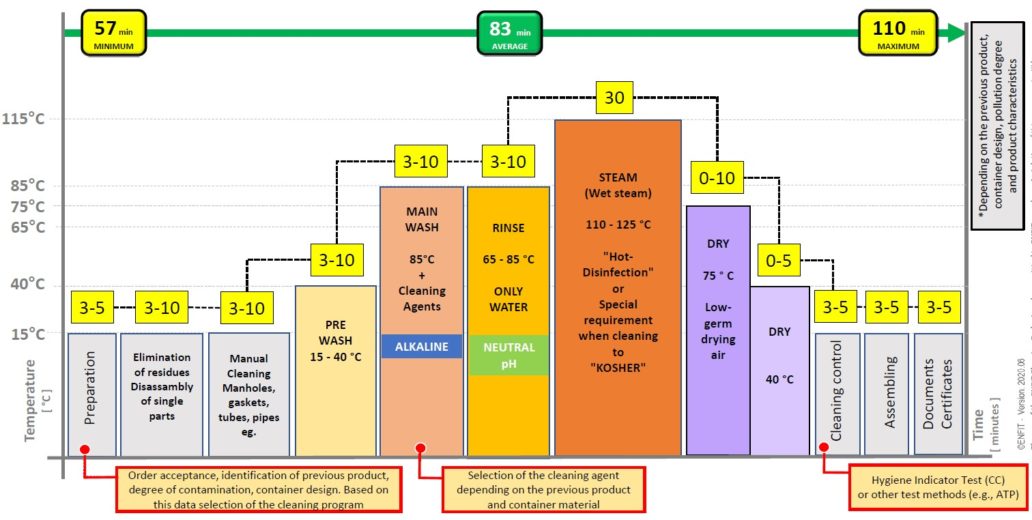
To be used for all products that require special cleaning. See list of prohibited previous loading. To meet the requirements for kosher food, cleaning is required according to the strict requirements of the Rabbinate. In practice, this means that the ENFIT P 260 K cleaning program should be used. After cleaning, the interior of the transport container, including all pipes, drain valves and drain pipes, must be exposed to saturated steam.

The ENFIT HQF certification is the prerequisite for cleaning according to the kosher standard
ENFIT P 260 K

Forbidden previous loading

  • Animal fats or animal oils (tallow, lard, etc.)
  • Fish oils or fish substances. gelatin compositions
  • Milk and/or lactose products: milk, butter, cream and cheese fats
  • Liquid dairy products: whey, milk fat, lactose syrup, milk carton, chocolate
  • glycerin or glycerin products, cider or vinegar, not certified kosher
  • Grape juice, fruit juice with grapes, wine, cognac, sherry, brandy, liqueur, wine yeast
  • Non-pure alcohol, non-pure vodka, alcoholic beverages, brown tequila
  • Non-vegetable based fat and oil. Various fat mixtures and margarine
  • fatty acid, caprylic acid, acrylic acid and/or non-vegetable stearic acid
  • Other non-kosher food or chemical products in consultation with the rabbinate.
P 270 H

Halal, light ritual contamination

HALAL compliant cleaning of transport units

In order to ensure that the muslim food laws are observed and that the food is halal, not only is the HALAL certification of food production facilities important, but it must also be guaranteed that raw materials and food are transported exclusively in transport containers they are cleaned according the ENFIT HALAL cleaning standards and documented with the ECC-ENFIT CLEANING CERTIFICATE, which is tamper-free generated with the ENFIT-bulkvision Software.

The term "halal" comes from Islamic and means something like "permitted, pure". This term has an important place in the Islamic faith. According to Islamic law, all actions that are permissible and in line with dogmatic requirements are considered "halal". All impermissible actions are summarized under the term "haram".

An important principle for Halal food is that the origin and composition of the food must consistently meet the high Halal requirements. This applies to all animals or ingredients (raw materials) used. Furthermore, halal also focuses on the individual processing or manufacturing steps of a foodstuff, starting with slaughtering, washing and cleaning, packaging, storage, transport and sale.

In each individual production step, it must be ensured that the companies and their staff know and apply all the measures for impeccable hygiene, safety and good manufacturing practice. During the production of halal food, contact with prohibited raw materials and food (haram) must be excluded. In many national and international production facilities, however, products and raw materials that are haram are also processed. Therefore, the strict separation of Halal and Haram products is important. The certification and monitoring of the establishments that produce halal products is carried out by accredited halal certification organizations according to international halal standards.

ENFIT HALAL Cleaning Standard

Until now, there has not been a defined standard for "halal cleaning", although the abbreviations "P26 for kosher process" and "P27 for halal process" have been known in logistics and container cleaning for many years. If you ask the organization that issued these acronyms, you will find that there is no defined and specified cleaning program (cleaning process) for it. Basically, every cleaning station has done what it thought was right. Neither the HALAL organizations nor the industry were aware of this. An intolerable situation.

As the first independent and international organization, ENFIT has accepted the task and developed international cleaning programs (processes) for the "Halal cleaning" of transport containers in close coordination with the heads of Muslim communities, the imams, and the experts recognized HALAL certification bodies. These "Halal cleaning programs" meet the strict Muslim requirements for cleanliness and are based on the ritual degree of soiling, which is essentially influenced by the previous loading of a transport container.

Pork, pork derivatives, haram gelatin, juices clarified with haram gelatin, blood or alcohol (wine, beer or spirits) shall not be used in the production of halal food. Other contaminants that may occur as a result of improper handling of the raw materials or food and cause harm to the health of the consumer are also prohibited. This includes harmful contamination with mold, prions, salmonella, chemicals or foreign bodies such as glass, wood, metal or plastic granules.

ENFIT P 270 H

Light contamination

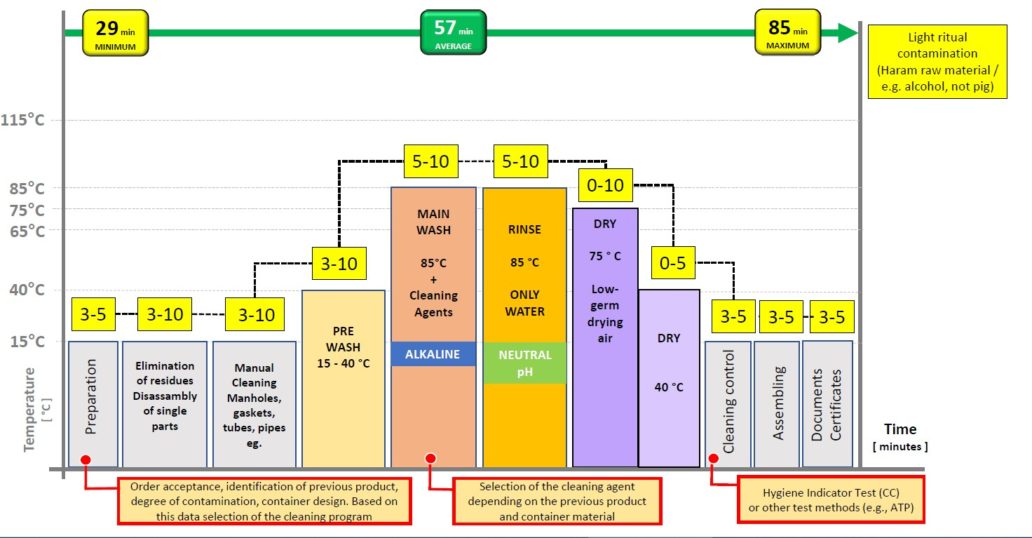
ENFIT P 270 H - Light ritual contamination (Haram-raw materials. For example: Alcohol. No pork)

Depending on the degree of ritual contamination, which depends on the transported products and raw materials, there are three different cleaning programs. Only cleaning stations that are certified according to the high requirements of the ENFIT HQF standard are authorized to use these cleaning programs. This also requires the corresponding instruction of the cleaning staff in the special features and requirements that result from the Muslim food laws.

ENFIT P 270 H

Vorbidden previous loading

  • Pork and all pork derivatives (tallow, lard, galantine, etc.),
  • Fish oils or fish substances. gelatin compositions,
  • Glycerin or glycerin products, cider or vinegar
  • Fruit juices clarified with pork galantine
  • Wine, cognac, sherry, brandy, liqueur, wine yeast, beer
  • All other alcoholic beverages
  • Non-vegetable based fat and oil. Various fat mixtures and margarine,
  • fatty acid, caprylic acid, acrylic acid and/or non-vegetable stearic acid,
  • Other non-halal food or chemical products in consultation with ENFIT.

P 370 H

Halal, medium ritual contamination

HALAL compliant cleaning of transport units

In order to ensure that the muslim food laws are observed and that the food is halal, not only is the HALAL certification of food production facilities important, but it must also be guaranteed that raw materials and food are transported exclusively in transport containers they are cleaned according the ENFIT HALAL cleaning standards and documented with the ECC-ENFIT CLEANING CERTIFICATE, which is tamper-free generated with the ENFIT-bulkvision Software.

The term "halal" comes from Islamic and means something like "permitted, pure". This term has an important place in the Islamic faith. According to Islamic law, all actions that are permissible and in line with dogmatic requirements are considered "halal". All impermissible actions are summarized under the term "haram".

An important principle for Halal food is that the origin and composition of the food must consistently meet the high Halal requirements. This applies to all animals or ingredients (raw materials) used. Furthermore, halal also focuses on the individual processing or manufacturing steps of a foodstuff, starting with slaughtering, washing and cleaning, packaging, storage, transport and sale.

In each individual production step, it must be ensured that the companies and their staff know and apply all the measures for impeccable hygiene, safety and good manufacturing practice. During the production of halal food, contact with prohibited raw materials and food (haram) must be excluded. In many national and international production facilities, however, products and raw materials that are haram are also processed. Therefore, the strict separation of Halal and Haram products is important. The certification and monitoring of the establishments that produce halal products is carried out by accredited halal certification organizations according to international halal standards.

ENFIT HALAL Cleaning Standard

Until now, there has not been a defined standard for "halal cleaning", although the abbreviations "P26 for kosher process" and "P27 for halal process" have been known in logistics and container cleaning for many years. If you ask the organization that issued these acronyms, you will find that there is no defined and specified cleaning program (cleaning process) for it. Basically, every cleaning station has done what it thought was right. Neither the HALAL organizations nor the industry were aware of this. An intolerable situation.

As the first independent and international organization, ENFIT has accepted the task and developed international cleaning programs (processes) for the "Halal cleaning" of transport containers in close coordination with the heads of Muslim communities, the imams, and the experts recognized HALAL certification bodies. These "Halal cleaning programs" meet the strict Muslim requirements for cleanliness and are based on the ritual degree of soiling, which is essentially influenced by the previous loading of a transport container.

Pork, pork derivatives, haram gelatin, juices clarified with haram gelatin, blood or alcohol (wine, beer or spirits) shall not be used in the production of halal food. Other contaminants that may occur as a result of improper handling of the raw materials or food and cause harm to the health of the consumer are also prohibited. This includes harmful contamination with mold, prions, salmonella, chemicals or foreign bodies such as glass, wood, metal or plastic granules.

ENFIT P 370 H

Medium contamination

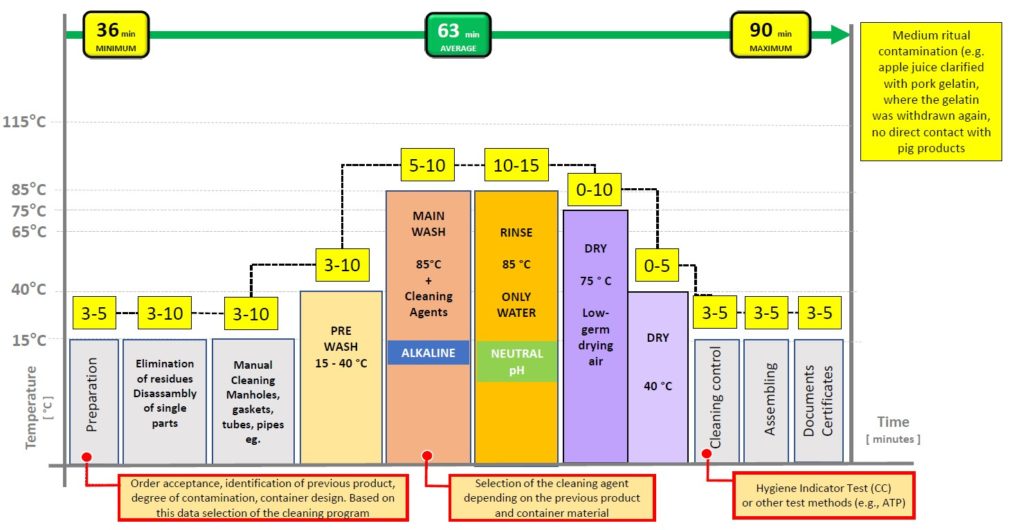
ENFIT P 370 H - Medium ritual contamination (e.g. apple juice clarified with pig gelatine, even if the galantine was filtered off. No direct contact with pig products)

Depending on the degree of ritual pollution, which depends on the transported products and raw materials, there are three different cleaning programs. Only cleaning stations that are certified according to the high requirements of the ENFIT HQF standard are authorized to use these cleaning programs. This also requires the corresponding instruction of the cleaning staff in the special features and requirements that result from the Muslim food laws.

ENFIT P 370 H

Vorbidden previous loading

  • Pork and all pork derivatives (tallow, lard, galantine, etc.),
  • Fish oils or fish substances. gelatin compositions,
  • Glycerin or glycerin products, cider or vinegar
  • Fruit juices clarified with pork galantine
  • Wine, cognac, sherry, brandy, liqueur, wine yeast, beer
  • All other alcoholic beverages
  • Non-vegetable based fat and oil. Various fat mixtures and margarine,
  • fatty acid, caprylic acid, acrylic acid and/or non-vegetable stearic acid,
  • Other non-halal food or chemical products in consultation with ENFIT.

P 470 H

Halal, heavy ritual contamination

HALAL compliant cleaning of transport units

In order to ensure that the muslim food laws are observed and that the food is halal, not only is the HALAL certification of food production facilities important, but it must also be guaranteed that raw materials and food are transported exclusively in transport containers they are cleaned according the ENFIT HALAL cleaning standards and documented with the ECC-ENFIT CLEANING CERTIFICATE, which is tamper-free generated with the ENFIT-bulkvision Software.

The term "halal" comes from Islamic and means something like "permitted, pure". This term has an important place in the Islamic faith. According to Islamic law, all actions that are permissible and in line with dogmatic requirements are considered "halal". All impermissible actions are summarized under the term "haram".

An important principle for Halal food is that the origin and composition of the food must consistently meet the high Halal requirements. This applies to all animals or ingredients (raw materials) used. Furthermore, halal also focuses on the individual processing or manufacturing steps of a foodstuff, starting with slaughtering, washing and cleaning, packaging, storage, transport and sale.

In each individual production step, it must be ensured that the companies and their staff know and apply all the measures for impeccable hygiene, safety and good manufacturing practice. During the production of halal food, contact with prohibited raw materials and food (haram) must be excluded. In many national and international production facilities, however, products and raw materials that are haram are also processed. Therefore, the strict separation of Halal and Haram products is important. The certification and monitoring of the establishments that produce halal products is carried out by accredited halal certification organizations according to international halal standards.

ENFIT HALAL Cleaning Standard

Until now, there has not been a defined standard for "halal cleaning", although the abbreviations "P26 for kosher process" and "P27 for halal process" have been known in logistics and container cleaning for many years. If you ask the organization that issued these acronyms, you will find that there is no defined and specified cleaning program (cleaning process) for it. Basically, every cleaning station has done what it thought was right. Neither the HALAL organizations nor the industry were aware of this. An intolerable situation.

As the first independent and international organization, ENFIT has accepted the task and developed international cleaning programs (processes) for the "Halal cleaning" of transport containers in close coordination with the heads of Muslim communities, the imams, and the experts recognized HALAL certification bodies. These "Halal cleaning programs" meet the strict Muslim requirements for cleanliness and are based on the ritual degree of soiling, which is essentially influenced by the previous loading of a transport container.

Pork, pork derivatives, haram gelatin, juices clarified with haram gelatin, blood or alcohol (wine, beer or spirits) shall not be used in the production of halal food. Other contaminants that may occur as a result of improper handling of the raw materials or food and cause harm to the health of the consumer are also prohibited. This includes harmful contamination with mold, prions, salmonella, chemicals or foreign bodies such as glass, wood, metal or plastic granules.

ENFIT P 470 H

Heavy contamination

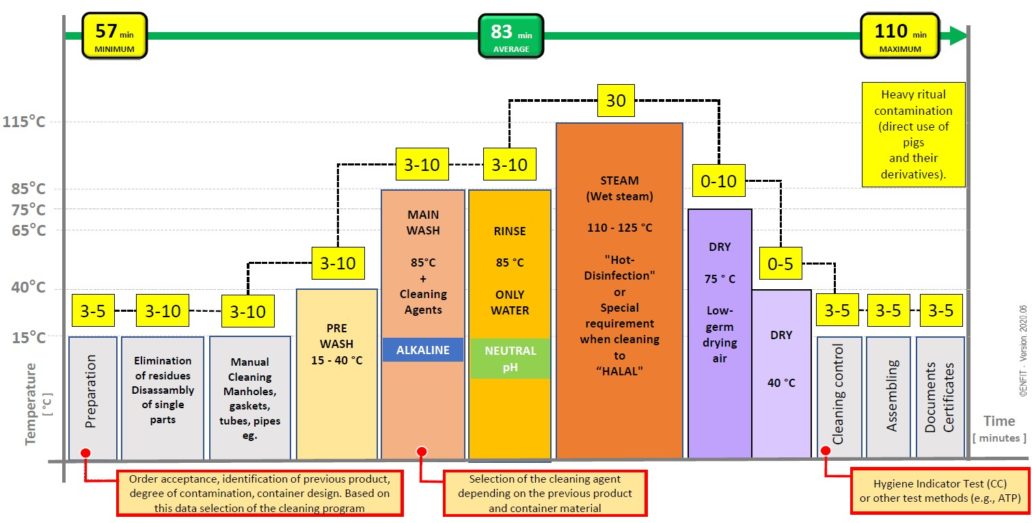
ENFIT P 470 H - Heavy ritual contamination (direct use of pigs and their derivatives)

Depending on the degree of ritual contamination, which depends on the transported products and raw materials, there are three different cleaning programs. Only cleaning stations that are certified according to the high requirements of the ENFIT HQF standard are authorized to use these cleaning programs. This also requires the corresponding instruction of the cleaning staff in the special features and requirements that result from the Muslim food laws.

ENFIT P 470 H

Vorbidden previous loading

  • Pork and all pork derivatives (tallow, lard, galantine, etc.),
  • Fish oils or fish substances. gelatin compositions,
  • Glycerin or glycerin products, cider or vinegar
  • Fruit juices clarified with pork galantine
  • Wine, cognac, sherry, brandy, liqueur, wine yeast, beer
  • All other alcoholic beverages
  • Non-vegetable based fat and oil. Various fat mixtures and margarine,
  • fatty acid, caprylic acid, acrylic acid and/or non-vegetable stearic acid,
  • Other non-halal food or chemical products in consultation with ENFIT.

TCC

Tank cleaning codes for chemicals and dangerous goods

Tank Cleaning Codes - TTC

Cleaning of chemical transport container

While the cleaning of transport containers for food and feed primarily focuses on food and feed safety and transport hygiene, the transport of chemical products and hazardous goods is primarily about quality assurance of the products and safety during transport and cleaning.

The provisions of the ADR apply to transport. The abbreviation ADR stands for the European Agreement concerning the International Carriage of Dangerous Goods by Road (Accord européen relatif au transport international des marchandises Dangereuses par Route).

Dangerous goods are divided into nine dangerous goods classes by the ADR. These are based on the dangerous goods classification of the United Nations (UN).

The ADR defines specific regulations for transport and packaging for each of the nine dangerous goods classes. An ADR approval of containers and means of transport is mandatory for the transport of dangerous goods.

ADR — regulations for

  • the classification
  • Packaging,
  • Labelling,
  • and documentation of dangerous goods.
Back to transport hygiene

Newsletter

Standards change. Stay current.

New guidelines, certifications, PPWR updates and working group dates — compact and without marketing noise.

One click opens your email programme with a prepared message. The subscription takes effect once you send it.